C-PAC Platform
CPAC is an open-source software pipeline for automated preprocessing and analysis of resting-state brain activity image (fMRI) data. CPAC aims to make it easy for both novice users and experts to explore brain imaging data by quickly configuring data processing pipelines. I covered the end-to-end process for this project and delivered UI to devs for development.
My Role
Timeline
Teammates
Status
Tools
Context
CPAC is short for Configurable Pipeline for the Analysis of Connectomes (C-PAC), an open-source software pipeline for automated preprocessing and analysis of resting-state brain activity image data (fMRI). Dell Medical School of UT Austin and Child Mind Institute aim to build the C-PAC portal for scientists to process brain activity images and prep for algorithm training. Ann and I completed designing C-PAC portal, starting from research, ideation to high-fidelity UI delivery under the supervision of Eric.
User Personas
After kicking off the project and discussing with stakeholders, I understood the key value propositions of C-PAC are: streamline the process of data processing; allow users to compose the best toolkit to process their data or open datasets; provide an efficient way for fMRI imaging processing; and stay friendly for users without a lot of computational background.
There are two types of users for C-PAC:

The Learner
New neuroscience students without a lot of computational background
JTBD: Get data processed quickly and without much learning burden

The Expert
Experts who have been in the industry/research for several years
JTBD: Process multiple datasets with different pipelines efficiently
How CPAC Works
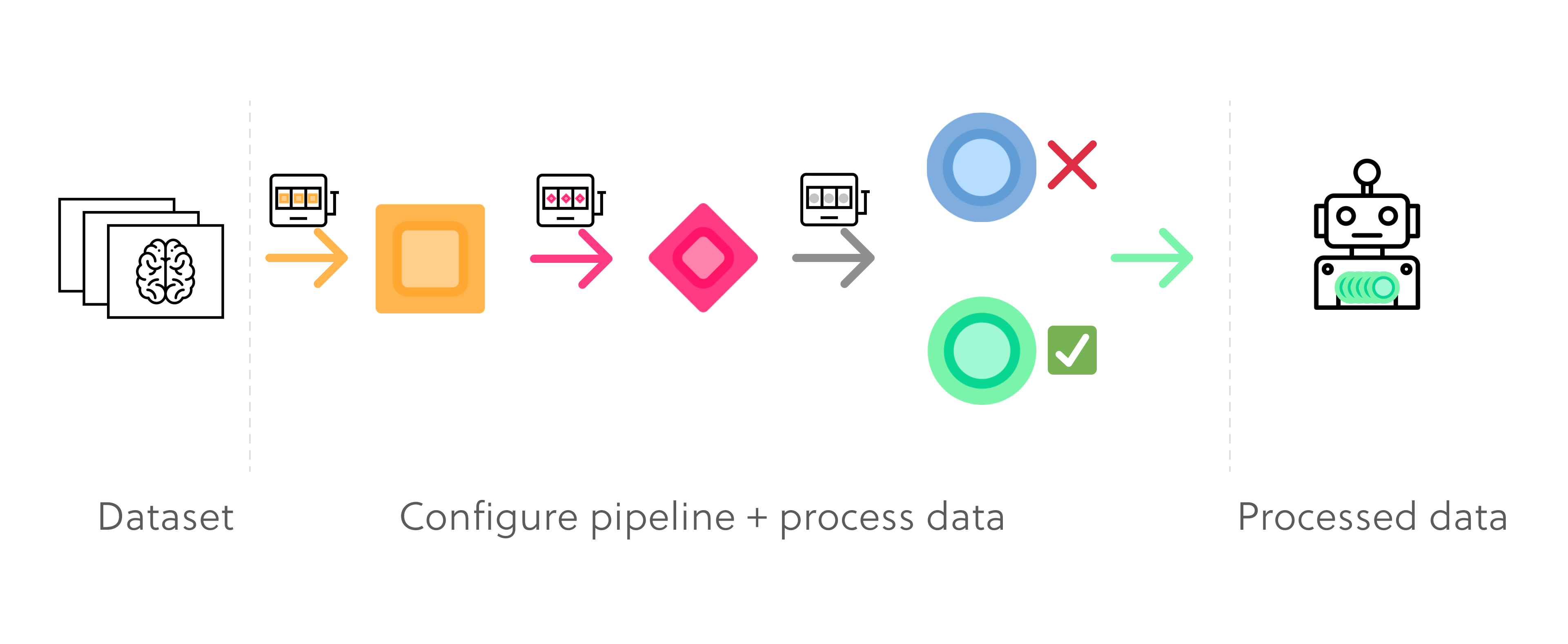
As illustrated in the image below, CPAC will provide an easy and intuitive interface for novice and expert users to configure their pipeline, and process brain activity images into data that could be further used for machine learning training.
Problem
Key User Interview Insights
- Users struggled at understanding the capacities of CPAC and where to start intuitively, because the current interface fails to indicate a linear flow that matches users' habits long developed from using coding tools to process data.
- Novice neuroscience students are not familiar with the process of pipeline configuration and need explanation constantly. They are overwhelmed by a long form of parameters that required them to start from scratch when configuring data pipelines, whilst they lack adequate knowledge to know how to adjust parameters to avoid bugs.
- Users use online open datasets and pipelines published on research papers. They will also customize pipelines and datasets for their own research purposes.
- Users' research purposes require them to test and run multiple combinations of datasets and pipelines, while it takes time to execute 1 combination of data processing. CPAC needs a more straightforward and efficient user interface that enables users to access datasets and pipelines.
- Understanding where things went wrong and correcting crashed tasks are the main challenges for users when executing data processing.
Design Goals
- Need to give users a clear vision of CPAC's capacities and its overall workflow.
- Provide a better way of explanations that help the Learner understand the definition of the terminologies and implications of making adjustments.
- Provide an access to allow users to find others' pipelines and open datasets while allowing them to customize them if needed. Allow users to test and manage different combinations of pipelines and datasets with improved indication of process.
- Help users to locate errors and be informed how to fix errors to complete data processing.
Delivery highlights
Reconfigure the information architecture
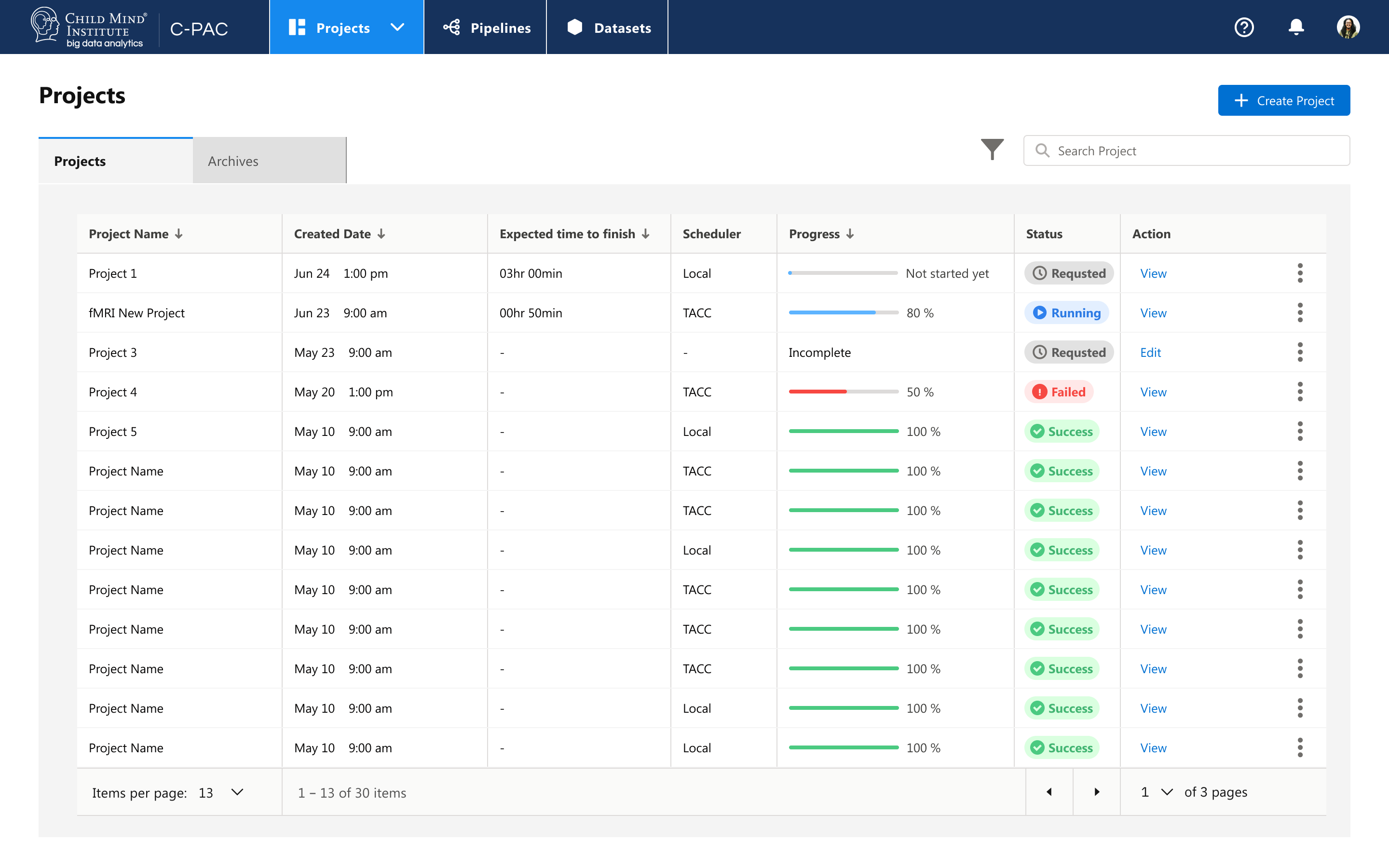
The landing page provides users clear and efficient access to managing their projects of data processing - main jobs-to-be-done, managing pipelines, and managing Datasets. The new GUI is an integrated dashboard that helps neuroscientists quickly start new data processing tasks and view the progress of tasks in process.
Wizard to help build up pipelines
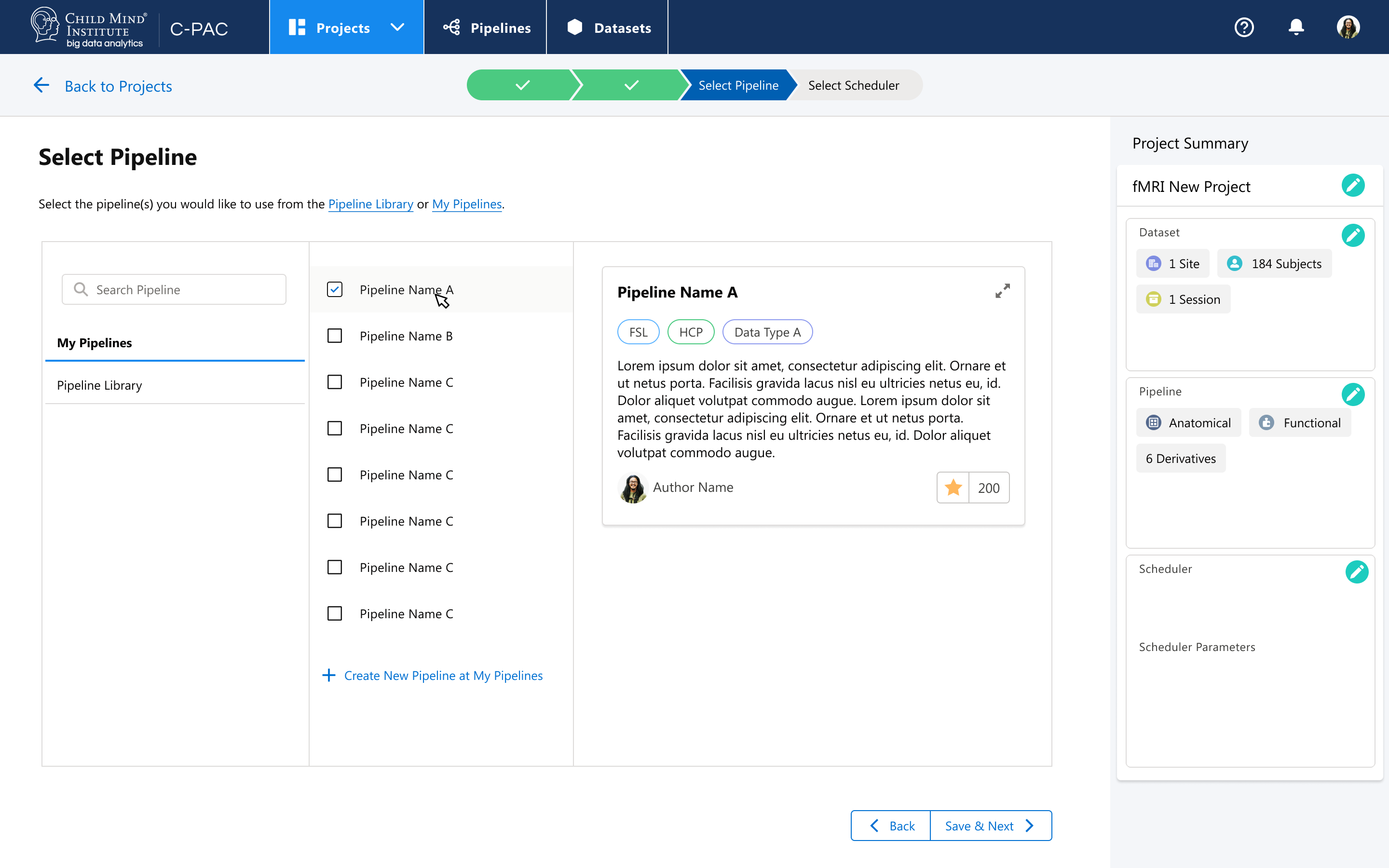
To help students (the Learner) learn how to use the platform and best practices to process images, we use a wizard to assist users to build up pipelines and apply datasets.
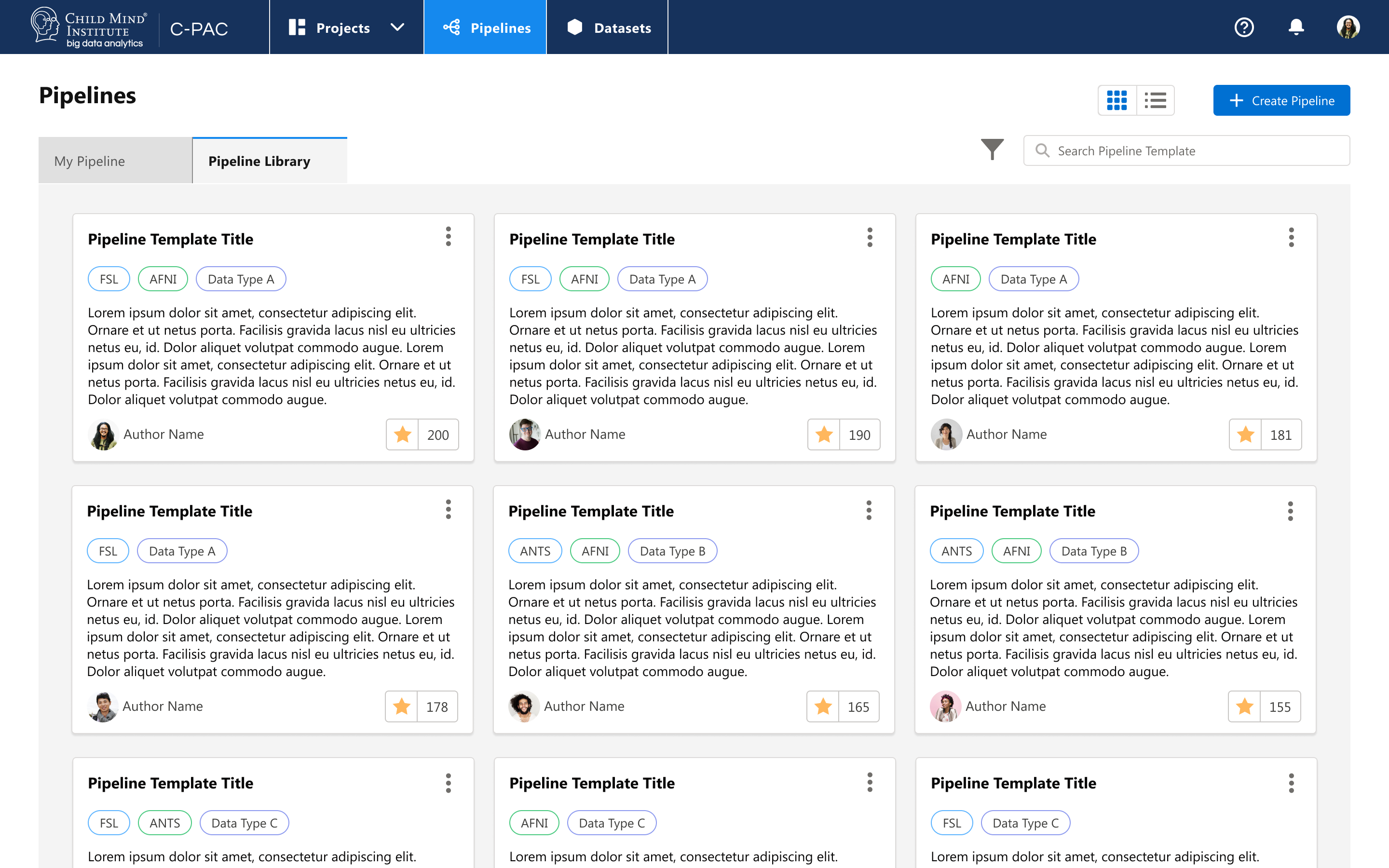
Customize and share Pipelines
Saved and shared pipelines and datasets could assist users to quickly deploy and process images.
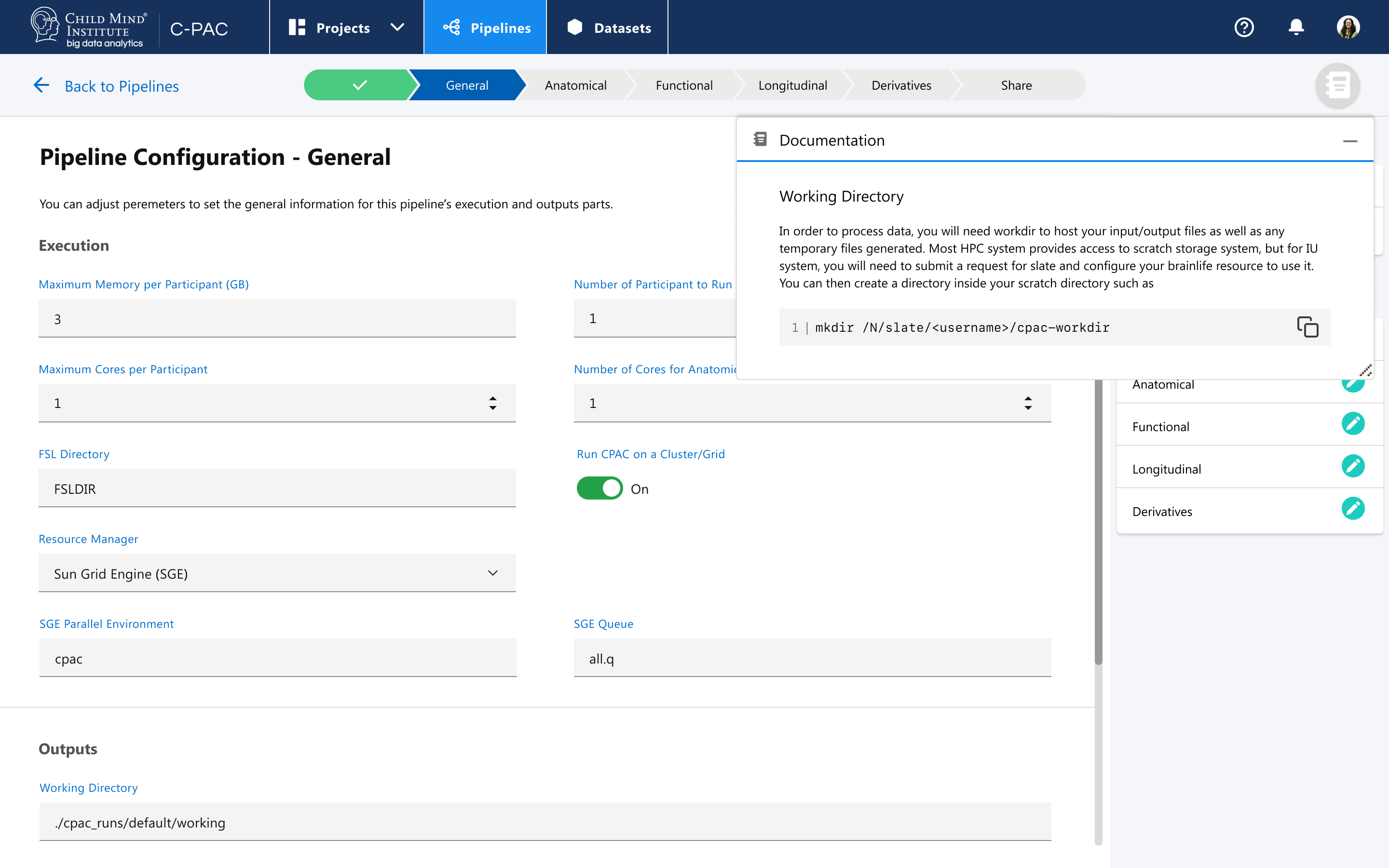
Documentation
Provide inline documentation to assist users to troubleshoot and finish their tasks.
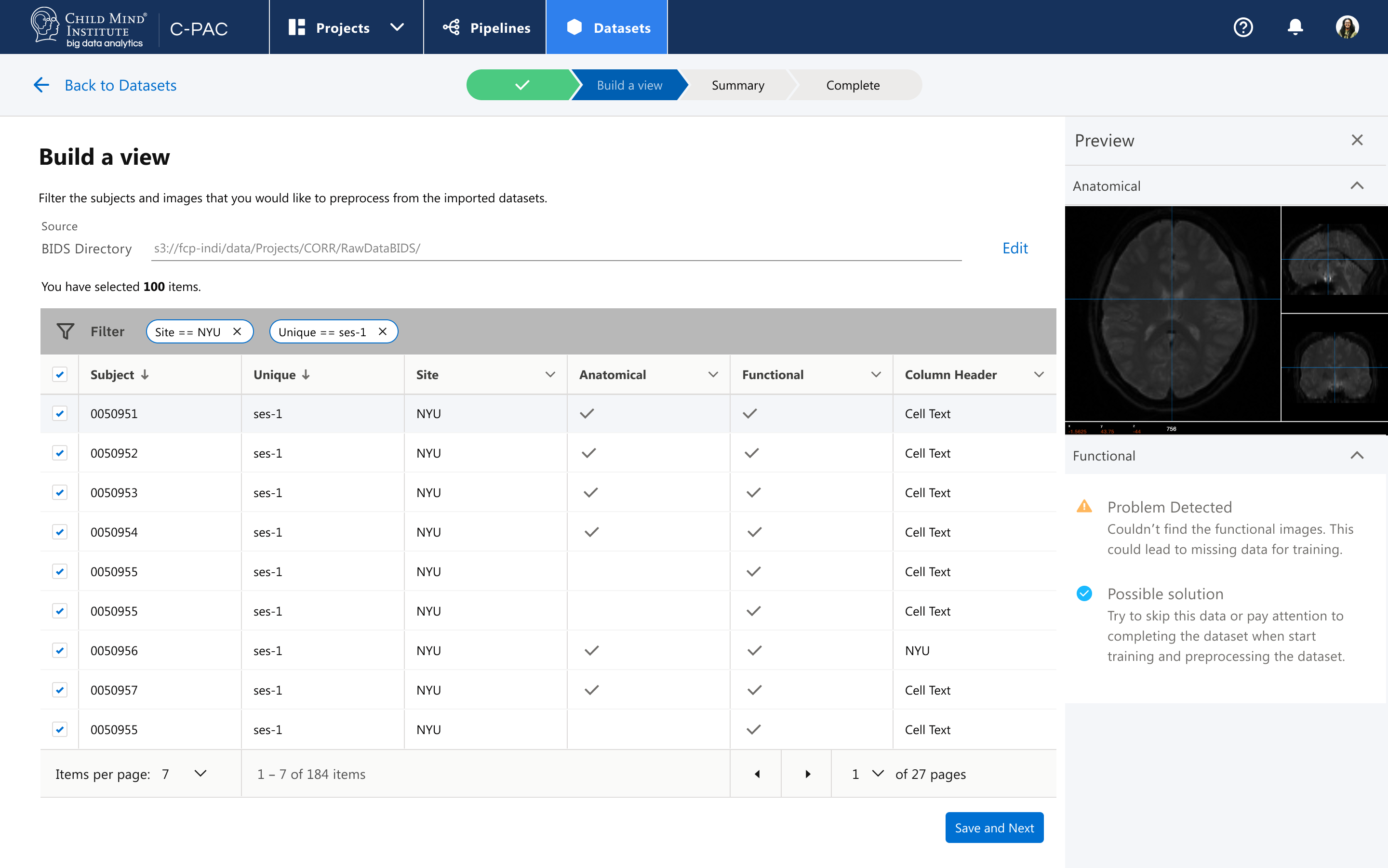
Preview data to be processed
When users are creating dataset for their jobs, they could take a preview of selected data, to avoid selecting images that fail to meet the requirement.
Visualize Processing
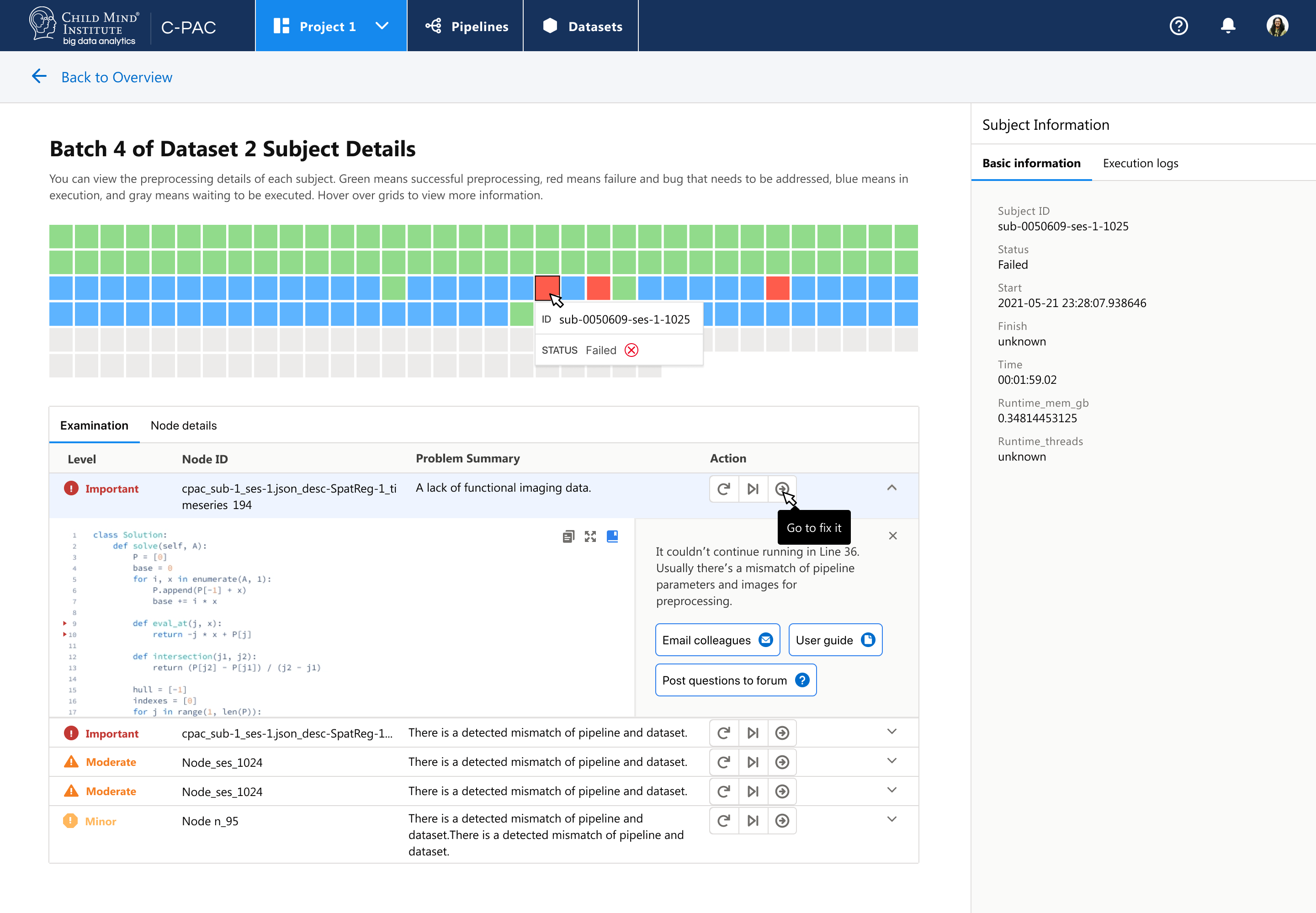
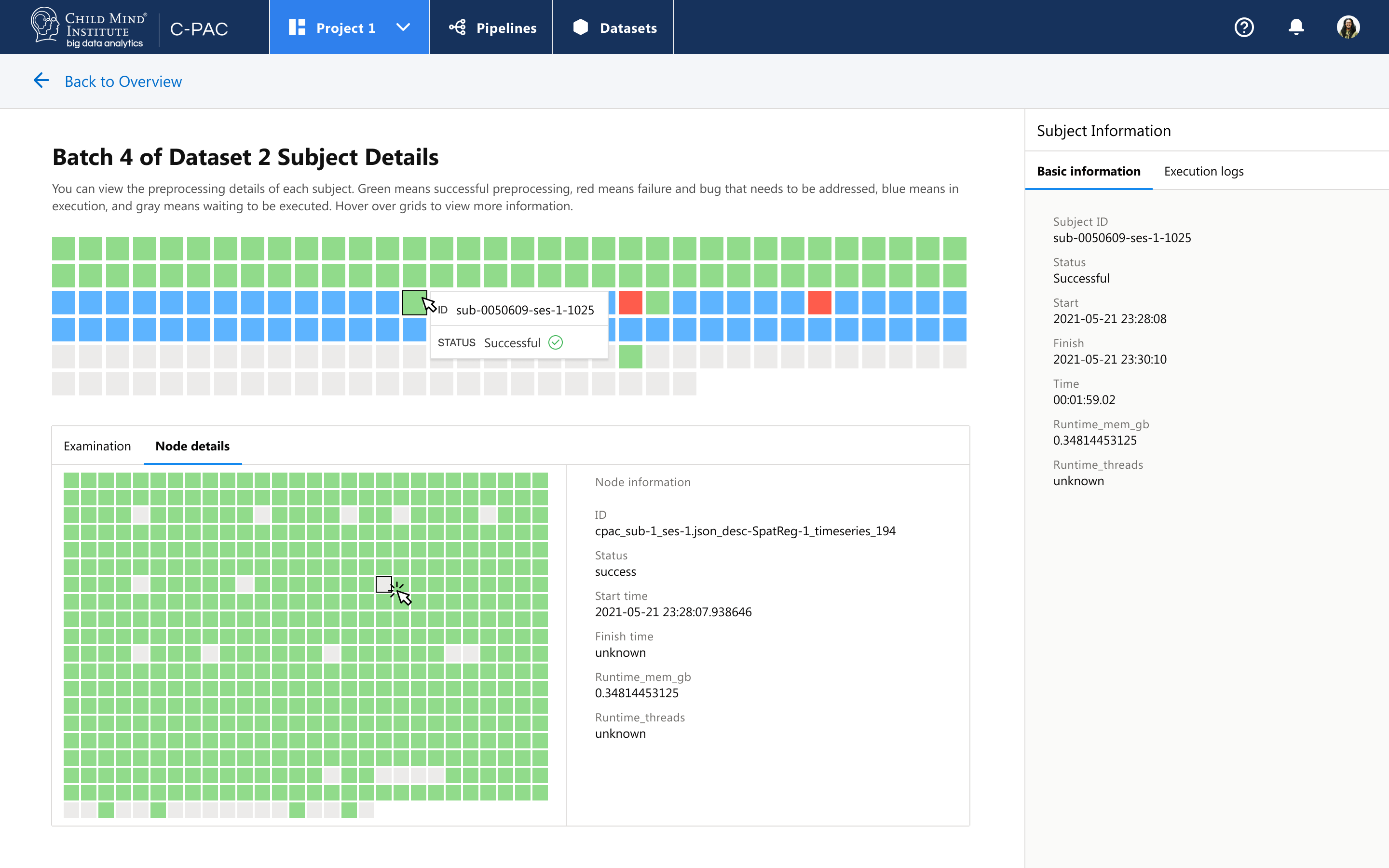
Users are able to view the processing and have a clear view of the progress on the landing page. A transparent process and timelines help users better value the time of wait and visualize whether any parts of the processing caused the failure of the overall project.
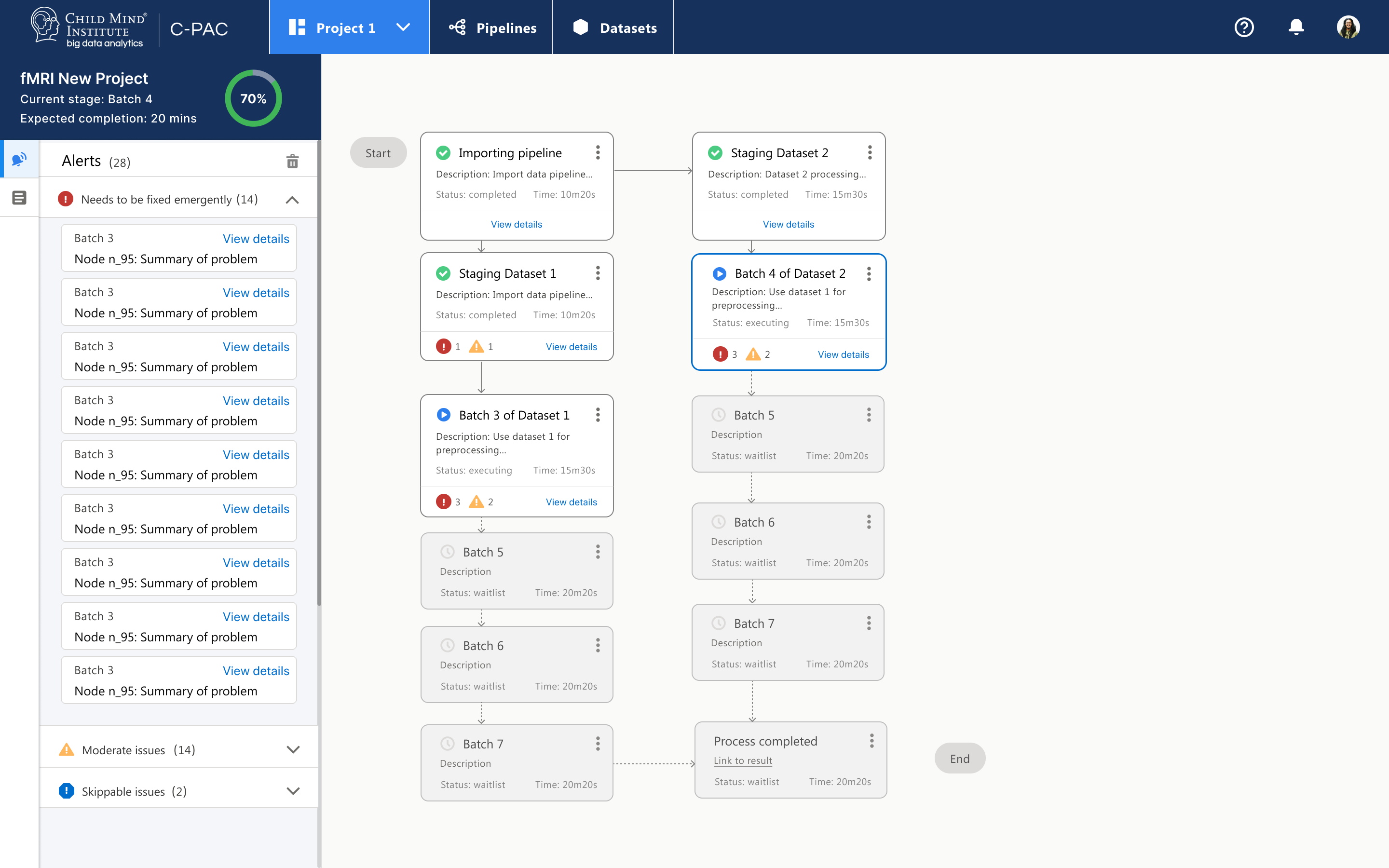
Visualize Processing
On detail page, the users could have a great knowledge of which node has crashed and understand the progress. They are able to check time stamps and logs about each node.
Reduce troubleshooting time
Users are able to view a list of problems and focus on the most severe problems based on C-PAC's ranking of problems. It will redirect users to fix where things crashed and provide users quick links to seek help from community and their team.